Invention in D Major
This invention begins with Bach introducing an entirely new emotional color to his palette. Technically and inventively, it doesn't appear significantly more complex or ambitious than the previous two. In fact, most of the compositional techniques used here can already be found in those earlier works. What truly stands out as completely original is Bach's handling of tempo and the overall atmosphere. The piece radiates a euphoric, joyful spirit—if one could imagine a "Mozart-like" version of Bach, this would probably come closest to that ideal.For these reasons, my comments will be brief. Not out of laziness, but because when there isn't a great deal to analyze, saying more would only dilute the point and make the discussion feel unnecessary or forced.
So, in my view, here are the few elements that truly stand out and immediately catch the ear / grab your attention.
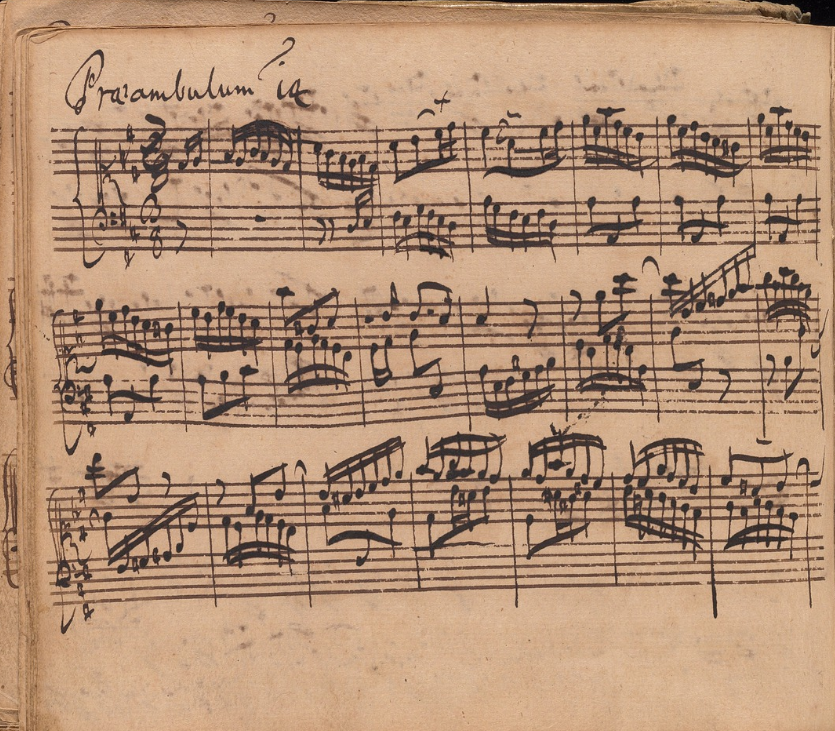
The whole first page for an overview
So, in my view, the real core of this invention—the thing that makes all those shifts in mood and musical character possible—is concentrated right there in the first four notes of the second measure: Da-dum da-dum.Another striking feature is how long Bach keeps the same left-hand pattern going. Even though he was perfectly capable of inventing fresh figures, he sticks with this one for quite a while. Because the music moves so quickly and has that lively, jumping character, the repeated left-hand figure never starts to feel dull or monotonous. Compare this, for instance, to the previous invention: the sense of time and repetition works completely differently here. That difference gives Bach far greater rhythmic and temporal flexibility.
As a result, the usual dangers of sounding boring or overly repetitive simply don’t apply—the nature of this piece is fundamentally different.
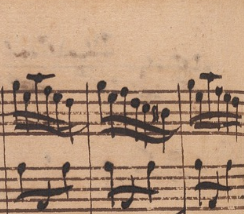
Later on, the same kind of thing happens in the right hand as well.
Because the music is so fast, the repetition doesn’t really register as noticeable or feel heavy. So once again, we see this sustained pattern appear in the right hand too.
Now, the essential idea I mentioned at the beginning—this core motif—opens the door for a particularly elegant gesture in the right hand. That DAM-dum figure makes possible an almost perfect, satisfying close in the right hand (among other things) right at measure 16.
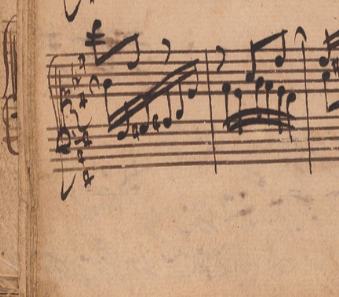
This leap / jump is built from exactly the same material.
Yet it feels completely natural and satisfying—thanks to the careful preparation and the way this motif has already been introduced in so many different forms. Now, when it arrives with this bold, serious leap, the jump itself carries a strong sense of resolution right away.
Another fascinating effect—one I see as a direct descendant of the same core motive—is this new variation that suddenly supplies the left hand with a kind of dramatic accompaniment. It’s an ingenious solution for balancing the continuous, flowing pattern in the right hand and preventing it from ever feeling repetitive. At the same time, this particular treatment wouldn’t have worked at the very beginning of the piece: the initial mood is lighter and more playful, whereas later—when the music takes on an almost theatrical, dramatic character—this kind of assertive, forceful support becomes exactly what’s needed.It’s like an elegant roar: the right hand calls for (and is perfectly matched by) a bold, dramatic left-hand response, and that’s precisely what this transformed motive delivers in the lower voice.
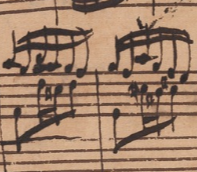
dum da do dam dum da do dam
Elegant drama
